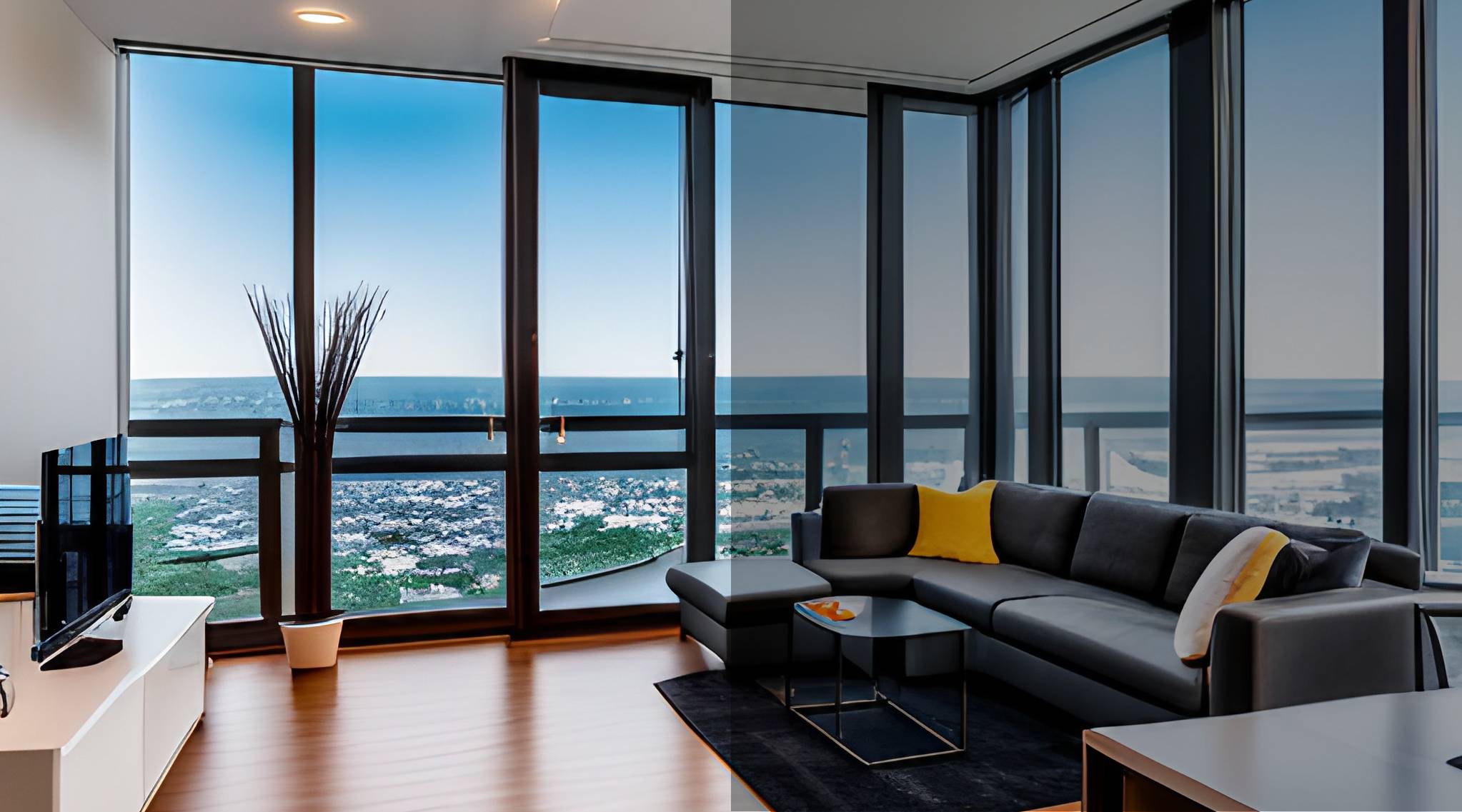
Window films are one of the most searched glass upgrade options in Toronto and the GTA because they can help fix heat, glare, privacy, and style issues without replacing the whole window. If you are comparing window films to double glazing, the best answer depends on what is wrong with the space right now. Some owners need a full glass upgrade. Many others just need the glass they already have to work better. That is why more homeowners, condo boards, retail shops, and office managers are checking window films first before they spend big on new window units.
In Toronto, this is not just a theory thing. It comes up every week. A west-facing condo in CityPlace gets too hot by mid-afternoon. A storefront in North York wants privacy on the lower half of the glass. A clinic in Scarborough needs frosted glass for treatment rooms. A small office in Markham wants their logo on the boardroom without changing the whole wall. Those are normal jobs. They are not fancy problems. They are everyday ones, and in many of those cases, window films make more sense than double glazing.
Double glazing still has a place. If the sealed unit has failed, if there is moisture between panes, or if the frame is worn out, replacing the unit may be the right call. But if the glass is still in good shape and the real issue is comfort, privacy, branding, or glare, window films are often the simpler fix. Less mess. Less downtime. Usually less cost too.
This article breaks that down in plain language. It looks at how window films compare with double glazing for Toronto homes and businesses, and why that matters in places like Etobicoke, Vaughan, Richmond Hill, Mississauga, and downtown Toronto where big glass is everywhere now.
Why Window Films Get Compared to Double Glazing So Often
Most people do not start by saying, “I need better glazing.” They say things like, “This room is way too hot,” or “People can see right in,” or “The glare on my screen is brutal.” That is the real search intent behind a lot of these jobs. They want a problem fixed. They do not care about fancy wording.
That is why window films come up so often in the same conversation as double glazing. Both deal with glass. Both can improve comfort. But they are not the same kind of upgrade. Double glazing changes the window unit. Window films change how the existing glass performs or looks.
For Toronto property owners, that difference matters. In a condo tower, replacing glass can mean extra approvals, access rules, and scheduling issues. In a busy storefront near Queen Street West, a bigger construction job can bother staff and customers. In a medical office in North York, you may just want privacy and a cleaner look, not a full replacement project.
That is why many owners end up reading about window film vs window replacement before they move ahead. It helps seperate a real window failure from a performance issue that can be solved in a much simpler way.
Natural Resources Canada also explains that windows, doors, and skylights can be a major source of heat loss in Canadian homes. That makes the comparison even more relevant in a place like the GTA where people deal with both humid summers and cold winters. You can read NRCan’s guide here: Upgrading windows and exterior doors.
So the question is not which option sounds more impressive. The question is which one solves the problem you actually have. Thats the part people miss.
When Double Glazing Is the Better Choice
Double glazing is still a good option in the right case. If the sealed unit has failed, if you can see fog between the panes, or if the frames are warped, cracked, or just plain old, replacing the glass unit may be the better move. It can also fit well when you are already doing a larger reno and the windows are part of that job anyway.
For some older Toronto homes, that makes perfect sense. A detached house in East York with aging wood frames is not the same as a newer condo with solid glass that just gets too much sun. One may need a real replacement. The other may not.
Double glazing is often worth it when:
- the sealed unit has failed
- there is moisture trapped between panes
- the frame is damaged or rotting
- you are already replacing windows as part of a larger project
- you need a full structural upgrade, not just better glass performance
But here is where people can overspend. They feel too much heat in one room and assume the only answer is new windows. That is not always true. A room can feel bad because of glare, direct sun, or lack of privacy even when the window itself is still fine. In that case, window films are often the smarter first option.
I have seen this alot in condos around Harbourfront and Liberty Village. The owner thinks the window is “bad,” but the real issue is that the room is getting blasted every afternoon. That is a comfort issue. Not always a failed-window issue.
Double glazing also does not solve every need. It does not add frosting to a boardroom. It does not put a logo on a front door. It does not turn clear clinic glass into private treatment-room glass by itself. That is where film starts to pull ahead.
Why Window Films Often Make More Sense in Toronto and the GTA
Window films are practical because they let owners improve the glass they already have. That matters in Toronto where many buildings have large glass areas but not every space needs a full replacement project. You can get better comfort, better privacy, better looks, or better branding without tearing out the unit.
That is one reason they fit so many different GTA spaces. A condo in Fort York might need less glare. A salon in Vaughan might need privacy on street-facing glass. A restaurant in Mississauga may want a cleaner look on the front windows. A dental office in Richmond Hill may want frosted bands on interior partitions. Those are all very different jobs, but window films can handle them.
The City of Toronto also has public guidance on indoor temperatures in apartment buildings, which shows how much indoor comfort matters here. If air conditioning is provided by the property owner, there are rules around summer cooling and winter heating in rental units. That makes comfort more than just a “nice to have” for many people. The City page is here: Indoor temperatures in apartment units.
Here is why window films often win this comparison:
- they are faster to install
- they avoid major tear-out
- they work well for many windows that are still in decent shape
- they can add privacy, style, and branding
- they usually cost less than a full replacement job
- they are easier for many condos, offices, and shops
A simple case helps here. A small office near Yonge and Eglinton had a glass meeting room that felt too exposed. They did not need new glazing. They needed privacy, a cleaner look, and a bit of branding. Frosted film with a logo strip fixed all three. The space looked better right away, and staff did not lose days dealing with a bigger job.
Another case was a condo-style living room in the GTA where the owner kept saying the space felt “useless after lunch.” Thats the kind of thing real people say. They do not say “solar heat gain coefficient.” They just say the room is too bright, too hot, and annoying. That kind of everyday problem is where window films really shine. Maybe “shine” is the wrong word here, but you get it.
Different Types of Window Films and What They Actually Do
Not all window films are doing the same job. This matters, because people often lump them all together. The better way is to match the film to the problem.
Vinyl Window Film
Vinyl window film is a broad, practical option for homes and businesses. It can help with glare, daytime privacy, and the general feel of a room. In many Toronto condos, this is the type people start with because the glass is fine but the room feels too exposed or too bright.
Decorative Window Film
Decorative film is mostly about privacy and appearance. It is useful for bathrooms, clinics, salons, office partitions, boardrooms, front doors, and sidelights. Frosted looks are common, but custom patterns are also popular. This is often the better choice when the owner wants the space to feel more polished, not just cooler.
Logo Film
Logo film is made for branding on glass. It works well on storefronts, office entries, reception areas, and meeting rooms. For Toronto businesses, this can help with both looks and function. It tells people where they are, adds privacy, and makes plain glass look more finished.
All three types can be useful, but the right one depends on the space. That is why a good local window tinting service will ask basic questions first. Is the issue heat? Is it privacy? Is it branding? Is the glass actually failing, or just underperforming? Those simple questions save people from buying the wrong thing.
How Toronto Owners Can Decide Between Window Films and Double Glazing
If you are stuck between these two options, start simple. Ask what is wrong with the space right now. Not what a sales page says. Not what sounds higher-end. Just what is actually bugging you day to day.
Choose double glazing if the window unit has failed or the frame is near the end. Choose window films if the glass is still good and you need better comfort, privacy, glare control, or a more finished look. That is the easiest rule.
For homeowners, this usually comes down to room comfort and privacy. For business owners, it can also include branding, customer-facing appearance, and how the space works for staff. A boardroom in Markham has different needs than a condo bedroom in Etobicoke. A café in downtown Toronto has different needs than a clinic in Scarborough. But the decision process is still pretty much the same.
Ask yourself:
- Is the glass failing, or just not working well for the room?
- Do I need less heat, less glare, or more privacy?
- Do I want the glass to look different?
- Do I want branding on the glass?
- Do I want a faster install and less mess?
If most of your answers point to comfort, privacy, design, or branding, window films are probly the better place to start. They are not magic. They will not fix rotten frames or failed seals. But for many Toronto and GTA properties, they solve the real problem without turning it into a much bigger job.
That is why this comparison keeps coming up, and why window films continue to be one of the most practical glass upgrades around here. They are useful, flexible, and they fit how people actually use their homes and businesses. Not flashy. Just smart.
Leave a Reply