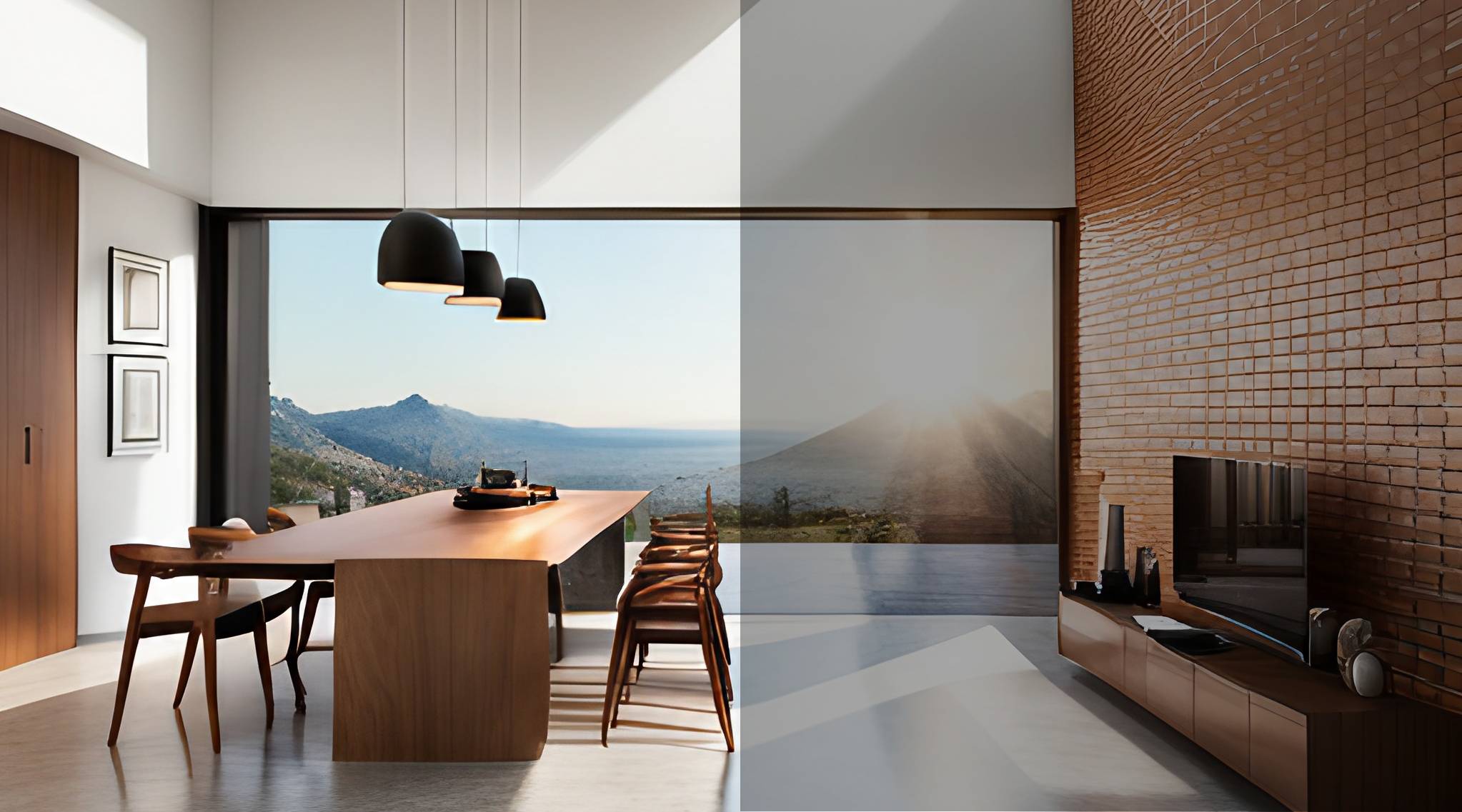
Window films are one of the most practical upgrades for homes, condos, offices, and storefronts in Toronto and the GTA. People search for window films when they want less glare, more privacy, lower heat, better branding, or cleaner glass that works harder. They also search because they are not sure what is true. Do window films really help? Do they make rooms too dark? Are they bad for some windows? Are the disadvantages minor, or are they the kind of thing that make you regret the install later? Those are fair questions, and this article answers them in plain language.
In Toronto and the GTA, window films come up alot because the glass here works hard. Condos in CityPlace and Liberty Village get blasted by afternoon sun. Detached homes in East York and North York often have one hot room that never feels right in July. Retail shops in Scarborough, Vaughan, and Mississauga want front glass that looks sharp but still gives privacy or branding. Offices near Union Station want less glare on screens. So yes, window films can help. But some claims around them are too simple, and some are just wrong. A better way to buy window films is to know the myths, the real limits, and what type of film fits the job.
If you want the broad basics first, this guide on window films is a good starting point. If you are already comparing the downsides, this article on window film disadvantages is also closely related. This post goes a bit further by focusing on how these issues show up in real Toronto and GTA spaces, not just in generic sales copy.
Why window films get misunderstood so often
A big reason is that the word “tint” gets used for almost everything. People think window films are all dark, all the same, or all made for heat control. That’s not true. Some window films are made for solar heat and glare. Some are made for privacy. Some are decorative. Some are for branding and logo use. Some are safety or security films. Same family of product, very diffent jobs.
Another problem is that people buy based on one promise. “This will keep the room cooler.” “This will give you privacy.” “This will make the storefront look better.” Those things can all be true. But window films still have trade-offs. A film that helps a lot with glare may change visible light. A privacy film that works great in the day may not do the same thing at night. A decorative film can look clean and stylish, but it still needs the right design and placement.
That’s why the best results come from matching the film to the actual problem. If you skip that step, the product gets blamed when the real issue was the wrong selection from the start.
Myth 1: Darker window films always work better
This is one of the most common myths. Darker does not always mean better. Some lighter window films still reject a good amount of heat and glare. Some nearly clear products are used because the owner wants comfort but does not want the space to feel closed in. That matters in smaller Toronto condos where light is part of what makes the unit feel bigger.
Take a west-facing condo near Fort York. The owner may think the answer is a very dark film because the afternoon sun is rough and the TV glare is awful. But a lighter solar film may do enough to calm the room while keeping the glass looking more open. That’s often the smarter choice for people who still want daylight.
The drawback is not that dark films are bad. The drawback is choosing by colour only. When people shop by how dark the film looks instead of what it is built to do, they can end up with a space that feels dimmer than they wanted. That mistake happens more than people think.
Myth 2: Window films fix every hot room
Window films can help a hot room. They can reduce solar heat gain, cut glare, and block a lot of UV. But they do not fix every comfort problem in a building. If the room has poor airflow, weak insulation, older seals, or an HVAC system that is already struggling, film will only do part of the job.
The U.S. Department of Energy explains that window films can help reduce solar heat gain and improve comfort. That’s useful in GTA homes and businesses that get a lot of direct summer sun. But it does not mean every hot room becomes perfect after the install. That sales line sounds nice, but it’s not honest.
A real example is a small office in North York with strong afternoon sun on the front glass. Staff complain every summer. Screens are harder to see, the front desk gets hot, and people keep turning the thermostat down. Window films can help that front area feel much better. But if the cooling system is undersized, the space may still have comfort issues. Film helps. It doesnt replace building fixes that are already overdue.
Myth 3: Window films always make a room too dark
This one scares off a lot of homeowners. It also confuses business owners who want privacy but still want a bright shop or office. Some window films reduce more visible light than others, but not all of them make a room feel dark. Some decorative and frosted products are used because they let light pass through while softening visibility.
A small clinic in Markham is a good example. The staff may want more privacy on interior glass but still need the space to feel bright and clean. In that case, a decorative privacy film can work better than blinds or curtains. Same with a front door sidelight in a Toronto home where the owner wants less direct visibility without losing daylight.
The real drawback here is expectation. A tiny sample can look one way in your hand and another way across a full window. That’s why people should ask how the film will affect both daytime brightness and the feel of the room at night. It’s a simple question, but it saves alot of headaches later.
Real drawback 1: Not every window should get every film
This is one of the biggest real issues, and it has nothing to do with hype. Glass type matters. Window age matters. Exposure matters. Some windows can take a wider range of films. Others need a more careful match. Double-pane glass, older sealed units, and low-e glass may need extra review before a film is picked.
That does not mean window films are unsafe. It means selection matters more than most people realize. A good installer asks about the window type, the age of the glass, the direction it faces, and what the room is used for. That is not overkill. That is how you avoid a bad result.
This is very common in Toronto and the GTA because the housing stock is mixed. An older house in the Beaches may have aging windows with wear around the seals. A newer condo in Vaughan may have large sealed glass units with strong sun exposure. Same product on both? Maybe not. Same result? Definately not.
Real drawback 2: Privacy works differently in the day and at night
People often buy privacy window films thinking privacy is privacy, full stop. But daylight privacy and nighttime privacy are not the same thing. Some films work best when it is brighter outside than inside. That can be great during the day. At night, if your interior lights are on and it is dark outside, the effect can change.
This matters for storefronts and ground-floor condos all over Toronto. A shop owner on Queen Street may love the daytime effect because it softens the view into the store office. But at night, once the interior lights are on, the space may be more visible than expected. Same problem in residential front entry glass.
The lesson here is simple. Ask how the film performs in both conditions. Dont just ask if it is “privacy film.” That label alone does not explain enough. People who skip that question are often the ones who feel misled after the install, even when the product was doing exactly what it was designed to do.
Real drawback 3: Cure time and maintenance can surprise people
Another issue is what the film looks like right after install. Some customers expect it to be fully settled within hours. Depending on the product and the weather, that may not happen. Cooler months in Toronto can slow cure time. A little haze or moisture during the curing stage can be normal, even though it makes people nervous.
A small retail job in Scarborough is a good case study. The owner added decorative and logo window films before a weekend promo. The install went fine, but a bit of moisture haze showed up right after. The owner panicked and thought the job was ruined. A few weeks later it cleared, and the film looked the way it should have from the start. The real problem was not the install. It was that no one explained what early curing could look like.
Maintenance matters too. Window films are not hard to care for, but they are not the same as bare glass. Aggressive scrub pads, blades, or harsh cleaners can damage some finishes. That’s a bigger concern for decorative films, branding films, and logo work on commercial glass. If the cleaning team treats it like plain glass, the finish may wear faster than expected.
Real drawback 4: One type of film will not solve every problem
This sounds obvious, but it gets ignored all the time. A solar film is not the same as a safety film. A decorative privacy film is not the same as a branding film. A logo film is not the same as a heat-control product. Yet people often shop as if all window films should do everything at once.
Here’s a local example. A salon in Mississauga wanted more privacy on side glass, less glare in the front, and a cleaner branded look from the street. That sounds like one project, but it may need more than one film type. A privacy product on the side, a logo or vinyl treatment on the front, and possibly a solar film in another area. Trying to make one film do all of that usually leads to compromise and dissapointment.
This is why the planning step matters. Not because it sounds technical, but because it keeps the job honest. One problem, one goal, one good product match. That’s usually how the best installs happen.
How to choose better window films in Toronto and the GTA
If you want to make a smarter choice, keep the questions simple and direct:
- What problem do I want window films to fix first?
- What kind of glass do I have?
- How much daylight do I want to keep?
- Do I need privacy in the daytime, nighttime, or both?
- Will the glass be cleaned often, and by who?
- Am I trying to solve heat, glare, privacy, branding, or safety?
That short list helps more than a long sales pitch. It also helps homeowners, property managers, and local business owners compare quotes in a smarter way. If an installer gives vague answers, skips questions about the glass, or promises that one film will solve every issue, that’s a red flag.
For Canadian buyers thinking about energy use, Natural Resources Canada has useful plain-language guidance on heat loss and home efficiency. That kind of background helps people see where window films fit, and where they do not. They are one useful tool, not the only one.
Final thoughts on window films
Window films can be a smart upgrade for Toronto and GTA homes and businesses. They can reduce glare, support privacy, improve comfort, and help glass work better for the way a room is actually used. They can also support branding on storefronts and interior office glass. But they still have real drawbacks. They may change room brightness, need the right glass match, behave differently in day and night privacy situations, and require better post-install expectations than many people start with.
That’s the honest version. Not hype. Not fear. Just a better way to look at window films before you spend the money. When the film matches the job, the results can be very good. When myths do the decision-making, people often blame the product for a problem that started much earlier.
Frequently Asked Questions About Window Films
Do window films really work for heat and glare?
Yes, many window films help reduce glare and solar heat gain. But they do not fix every building comfort issue on their own.
Are window films safe for condo windows?
They can be, but the glass type matters. That is why a proper review of the window is part of a good install process.
Do window films make rooms dark?
Some do, some barely change the light. It depends on the product and the goal of the install.
Can one window film do privacy, heat control, and branding all at once?
Sometimes one product can help with more than one thing, but not every film does every job well. Many spaces need a better match than that.
Leave a Reply