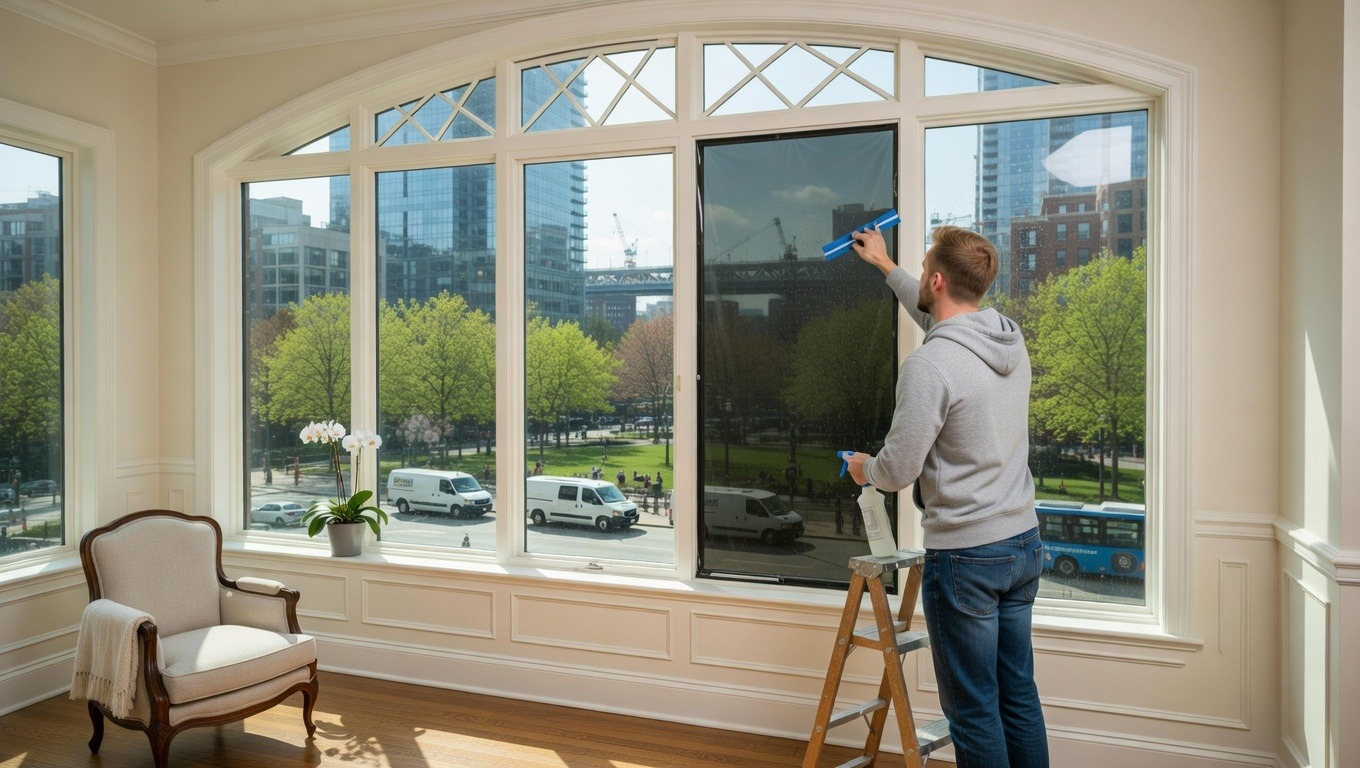
Window films are one of the easiest ways to make home windows work better in Toronto and the GTA. Homeowners use window films to cut glare, add privacy, soften harsh light, and give plain glass a cleaner look without replacing the window. If you are searching for window films for a condo, townhouse, semi, or detached home, this guide explains what window films are, how residential installation works, and why they are used so often across Toronto, Mississauga, Vaughan, Markham, Richmond Hill, and nearby cities.
Window films matter here because GTA homes deal with very real glass problems. A west-facing condo in Liberty Village can get way too bright after lunch. A bathroom window in North York may need privacy but still needs daylight. A front door in East York may feel too open to the street. A home office in Scarborough may need glass that looks more polished. That is where residential window films start to make sense. You keep the same glass, but you change how the glass behaves.
Many people still think window films only mean dark tint. That is not true. Modern window films include solar film, privacy film, frosted film, decorative finishes, vinyl window film, logo film, and clear films made for comfort or appearance. If you want a deeper explainer, this article on decorative window film is a useful place to start too.
For Toronto homeowners, the appeal is pretty simple. Window films can help a room feel calmer, less exposed, and easier to use. You do not need to live with blinds shut all day. You do not need to jump straight to new windows. For many homes, window films are the middle ground that finally fixes the problem.
What Window Films Are and How They Work in Real Toronto Homes
Window films are thin layers added to glass. Once applied, they change the look of the glass, the light coming through it, or the amount of heat and glare the room gets. Some window films are made for comfort. Some are made for privacy. Some are made for design. Some do more than one job at the same time.
That is why window films are used in so many kinds of homes across the GTA. A downtown condo with floor-to-ceiling glass does not need the same thing as a detached house in Etobicoke. A basement suite entry in Brampton does not need the same film as a bathroom window in Markham. A good installer looks at the room first, not just the window.
The most common types of window films for residential work include:
- Solar window films for glare and sun control
- Privacy window films for bathrooms, front doors, and lower-level rooms
- Decorative window films for frosted, etched, or patterned glass looks
- Vinyl window films for coverage, custom shapes, and glass graphics
- Logo film for home offices, studios, and side entrances used for clients
The idea is simple, but the choice can go wrong fast if the film does not match the problem. A homeowner may think they need dark tint, but the real issue may be privacy on a front sidelight. Another person may think they need full frosting, but really they only need a band across the lower half of the glass. That is why local knowledge matters.
In Toronto, window films are often used where homes are close together or where sunlight hits hard in the afternoon. That is why you see interest from people in condo-heavy areas like CityPlace, Fort York, and Mimico, but also from owners of family homes in Leaside, Riverdale, and Oakville. The problem sounds different, but the root issue is often the same. Too much light. Too much glare. Too much visibility. Not enough comfort.
One simple case is a condo near the Gardiner with a west-facing living room. The owner loves the view, but every sunny afternoon the room gets hard to use. The sofa gets warm. The TV reflects badly. The blinds stay closed, which ruins the view anyway. A solar-style window film can help lower glare and soften the heat gain while still keeping the room bright. That is a very common GTA call, and it is one reason window films keep getting more popular.
Another common case is a front entry in a suburban home. A lot of houses in Vaughan, Richmond Hill, and Markham have clear sidelights or decorative glass near the front door. It looks nice from the curb, but people walking by can often see more than the owner wants. A frosted or patterned window film can fix that fast. The entry still gets light, but the sightline changes. The home feels more private right away.
Some homeowners also use window films because they want the glass to look better, not just work better. Decorative and vinyl films are often picked for pantry doors, laundry rooms, office partitions, and studio glass. Replacing those panes with custom etched glass can cost alot more. A film gives you a similar finish for less mess and less cost.
Official Canadian resources also explain that UV-filtering films can reduce ultraviolet exposure on glass and help protect light-sensitive materials over time, which is why they are often discussed in spaces with furnishings, art, and finishes near bright windows. Homeowners who want that background can read more from the Canadian Conservation Institute.
Why Window Films Make Sense for Privacy, Comfort, and Daily Use in the GTA
People usually call about window films because one room in the house is bugging them every single day. That is the big thing. It is not about trends. It is about how the space feels when you actually live in it.
In the GTA, one of the biggest reasons is sun. Homes with large south-facing or west-facing windows can feel nice in the morning and rough by late afternoon. The glass pulls in strong light. Screens become hard to see. Floors fade over time. A room that looked open and airy starts to feel hot and sharp. Many people react by closing the curtains. That works, but then the room loses the thing they liked most, the daylight.
Window films give you another option. You keep the light, but you change how that light comes in. Some films lower glare. Some spread the light a bit more. Some cut the harsh look of direct sun. Some help the room feel less exposed from nearby homes and sidewalks. For a lot of Toronto houses and condos, that is enough to make the room usable again.
Privacy is another huge reason. Homes in Toronto often sit close to the sidewalk or close to the next house. Condos can face other buildings at short distance. Basement suites and home offices may need privacy without looking blocked off. This is where privacy window films and decorative window films really help. Frosted films are popular because they block the direct view while still letting in daylight. That works well for:
- bathroom windows
- front door glass
- basement suite entries
- stairwell windows
- main floor office glass
- side door panels
One GTA example that comes up more now is the home office. A lot of people meet clients at home, teach lessons from a studio, or use a side entrance for appointments. Clear glass can make that setup feel awkward. Logo film or a frosted band can fix that without making the space feel like a store. It is clean, simple, and proffesional without trying too hard.
Here is a second small case study. A family in East York had a main-floor bathroom with a narrow clear window facing the neighbour’s walkway. The room got good light, but nobody felt relaxed using it. They did not want blinds because the window was small and the room already felt tight. A frosted decorative film solved it in one visit. The light stayed. The view in was gone. The room felt better the same day. Thats the kind of result people care about.
Window films also make sense for homes that want style without heavy renovation. Decorative film can give a plain pane a softer, more finished look. Vinyl film can create partial coverage, lines, shapes, or simple patterns that suit the home. These details are often used in modern entries, renovated kitchens, and converted office corners.
Window films are also being searched more often because GTA housing keeps growing and changing. More people are living in condos, more homes have bigger glass areas, and more houses include side suites, garden suites, or flexible work spaces. Statistics Canada continues to track the region’s growth, and that growth brings more homes with the same glass-related issues. More people, more windows, more privacy concerns, more sunny rooms. It all adds up.
How Residential Window Film Installation Works and What to Ask Before Booking
Residential window film installation sounds easy, and the basic idea is easy. Clean the glass. Apply the film. Smooth it out. Trim it neatly. What makes the job good or bad is the prep, the film choice, and the finish.
A proper install usually starts with a short consult, photos, or a site visit. The installer should ask what room is causing trouble, how the sun hits it, whether the main issue is glare or privacy, and what kind of look you want. That part matters because two windows in the same house can need very different window films.
For example:
- A condo living room may need solar window film
- A bathroom may need frosted privacy film
- A front entry may need decorative film on sidelights
- A home office may need logo film or partial frosting
After that, the glass is cleaned very well. Dust and small debris matter more than people think. If they get trapped, the finish looks rough. The film is then measured, positioned, squeegeed flat, and trimmed by hand. On big panes and tight edges, skill really shows. A messy cut or dusty install can ruin the look of even the best film.
This is why many DIY jobs go sideways. The homeowner buys a cheap roll, sprays the glass, gets most of it on, and thinks the job is done. Then bubbles stay trapped. Corners lift. Dust shows. The cut lines look uneven. A few weeks later the film starts to look tired. Then they call a local installer to remove it and start again. That happens more than people admit.
Before you book a window film installer in Toronto or the GTA, ask simple questions:
- Which window films fit this room best?
- How much will the glass look different?
- Will the film help more with privacy or glare?
- Is the film right for my window type?
- What does the warranty cover?
- Do you have real samples I can see first?
You should also ask how the film looks at night. Daytime privacy and nighttime privacy are not always the same thing. Indoor lights change what glass does. A good installer should explain that in plain words, not sales talk.
Toronto experience matters too. Downtown condo jobs can involve booking elevators and dealing with loading rules. Older homes in neighbourhoods like the Annex or Riverdale may have tricky trim details. Houses near the lake may get stronger light at certain times of year. A team that works across Toronto and the GTA regularly will already know the small issues that slow jobs down or affect the final look.
If you are trying to fix a room without full renovation, window films are one of the more practical upgrades you can make. They are faster than replacing the glass, usually less disruptive, and often enough to solve the problem that keeps annoying you. Whether the goal is comfort, privacy, style, or a cleaner look for a home office, the right window films can make the room easier to live in without changing the whole house.
Quick View FAQs
What are window films for homes?
Window films are thin layers added to glass to improve privacy, reduce glare, soften sunlight, or change the look of the window. Homeowners use them on condos, houses, doors, and interior glass.
Are window films worth it in Toronto and the GTA?
Yes, many homeowners find window films worth it because they help with bright sun, privacy, and comfort without replacing the glass. They are often used on front doors, bathrooms, living rooms, and home offices.
Do window films make a room darker?
Some window films darken the glass a little, but many do not. Frosted and decorative films often keep the room bright while adding privacy.
Where can decorative or logo film be used in a home?
They work well on front door glass, office partitions, pantry doors, side entrances, and studio spaces. They add privacy, style, or branding without major renovation.
What should I ask before booking window film installation?
Ask about film type, glass compatibility, warranty, cure time, and how the film will look in day and night light. Ask to see real samples before you choose.
Leave a Reply