When it comes to enhancing the comfort and efficiency of a home, window films have become increasingly popular. They offer an innovative way to reduce heat, save energy, and improve the overall aesthetics of a living space. But how effective are they really? This article delves into the performance of window films for heat reduction, highlighting their benefits, installation process, and real-world applications.

Solar window films are thin layers of polyester or other materials applied to glass surfaces. They are designed to reduce solar heat gain, glare, and ultraviolet (UV) radiation, which can contribute to fading furniture and flooring. By blocking a significant portion of the sun’s rays, these films help maintain a cooler indoor environment and reduce reliance on air conditioning.
Benefits of Window Films for Heat Reduction
- Energy Efficiency: By minimizing heat gain, window films can significantly lower cooling costs. This makes them an excellent investment for homeowners looking to save on energy bills.
- Improved Comfort: Homes with window films maintain a more stable temperature, reducing hot spots and enhancing overall comfort.
- UV Protection: Solar films block up to 99% of harmful UV rays, protecting interior furnishings from fading and degradation over time.
- Glare Reduction: These films also reduce glare, making it easier to watch television or work on computers without straining your eyes.
- Enhanced Privacy and Security: Tinted films add an extra layer of privacy by obscuring views from the outside, while thicker films can provide additional security by holding shattered glass together.
How Window Films Work

Window films work by reflecting and absorbing solar energy. The technology behind them involves multiple layers, each serving a distinct function. The outer layer reflects sunlight, while the inner layers absorb heat and UV radiation. This layered construction allows the film to effectively reduce heat transfer without compromising natural light.
Types of Window Films
- Dyed Films: These films use a dye that absorbs solar energy. They’re the most affordable but might not last as long as other types.
- Metalized Films: These contain microscopic metallic particles that reflect solar energy. They’re more durable and offer better heat reduction.
- Ceramic Films: Using advanced nanotechnology, ceramic films are excellent at blocking heat while maintaining clarity and visibility.
Installation Process
The installation of window films is a straightforward process but requires precision for optimal performance.
Steps for Installation
- Preparation: Clean the window thoroughly to remove any dust or debris. A clean surface ensures better adhesion.
- Cutting the Film: Measure the window and cut the film to the appropriate size, allowing a slight overlap for adjustments.
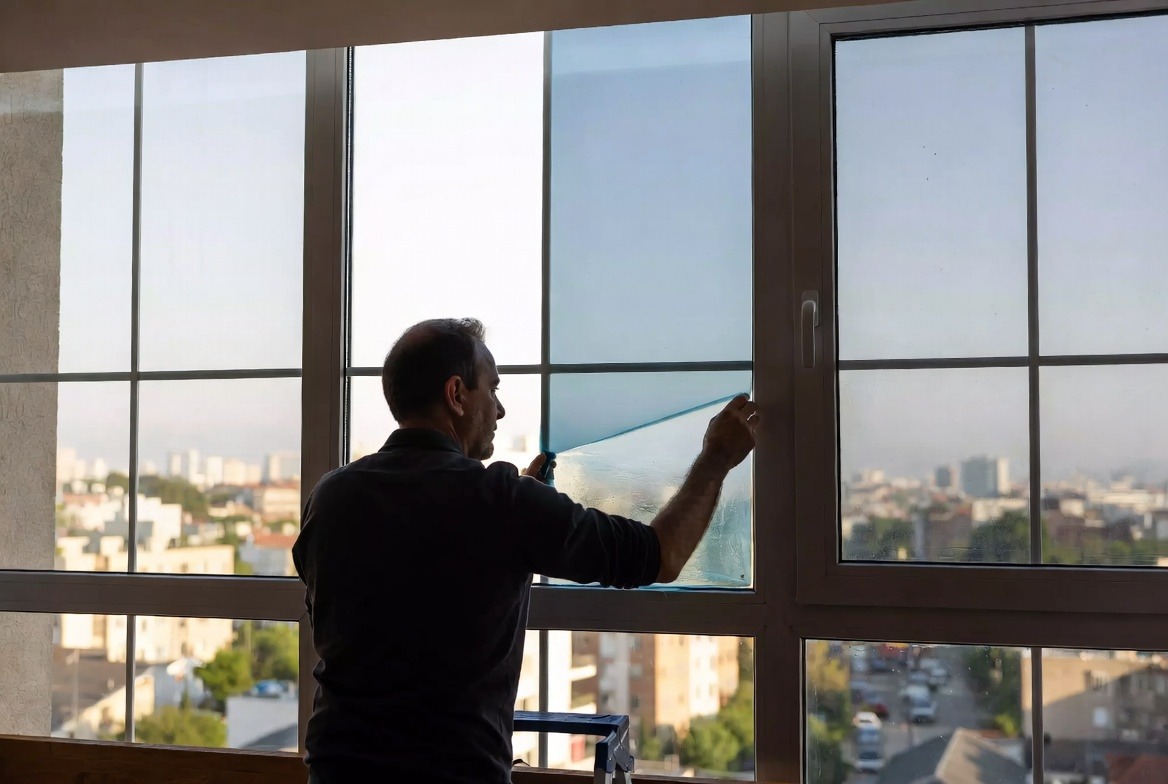
- Application: Using a spray bottle, apply a soapy water solution to the window. This helps position the film and prevents it from sticking immediately.
- Smoothing: Carefully place the film onto the wet window and use a squeegee to remove air bubbles and excess solution.
- Trimming: Once the film is in place, trim any excess material using a sharp blade for a clean finish.
Professional vs. DIY Installation
While DIY installation is possible, professional installation ensures the film is applied without bubbles or creases, maximizing its performance and lifespan. Professionals also have access to high-quality materials and can provide a warranty for their work.
Real-World Applications and Performance

by Oleg Laptev (https://unsplash.com/@snowshade)
Case Studies
- Residential Homes: Homeowners have reported significant reductions in indoor temperatures and energy bills after installing window films. The films have also been praised for their contribution to a more consistent indoor climate.
- Commercial Buildings: Office buildings benefit from reduced cooling costs and improved employee comfort. The decrease in glare has also been noted as a productivity booster.
- Retail Spaces: By reducing UV exposure, window films help maintain the quality of displayed merchandise, prolonging its lifespan and reducing replacement costs.
Performance Metrics
The effectiveness of window films can be measured using several key metrics:
- Visible Light Transmission (VLT): This indicates how much light passes through the film. A lower VLT means less light and heat enter the space.
- Solar Heat Gain Coefficient (SHGC): This measures how well the film blocks heat from the sun. A lower SHGC indicates better performance.
- U-Value: This metric shows the rate of heat transfer through the film. A lower U-value signifies better insulation.
Conclusion
Window films for heat reduction offer a practical and cost-effective solution for enhancing energy efficiency and comfort in homes and commercial spaces. By choosing the right type of film and ensuring proper installation, homeowners can enjoy a cooler, more comfortable environment while saving on energy costs.
As an interior designer, incorporating window films into your projects can provide clients with stylish, eco-friendly solutions that not only complement interior designs but also contribute to long-term energy savings. Whether for residential or commercial applications, window films prove to be a valuable addition to any space aiming for improved comfort and efficiency.
Leave a Reply