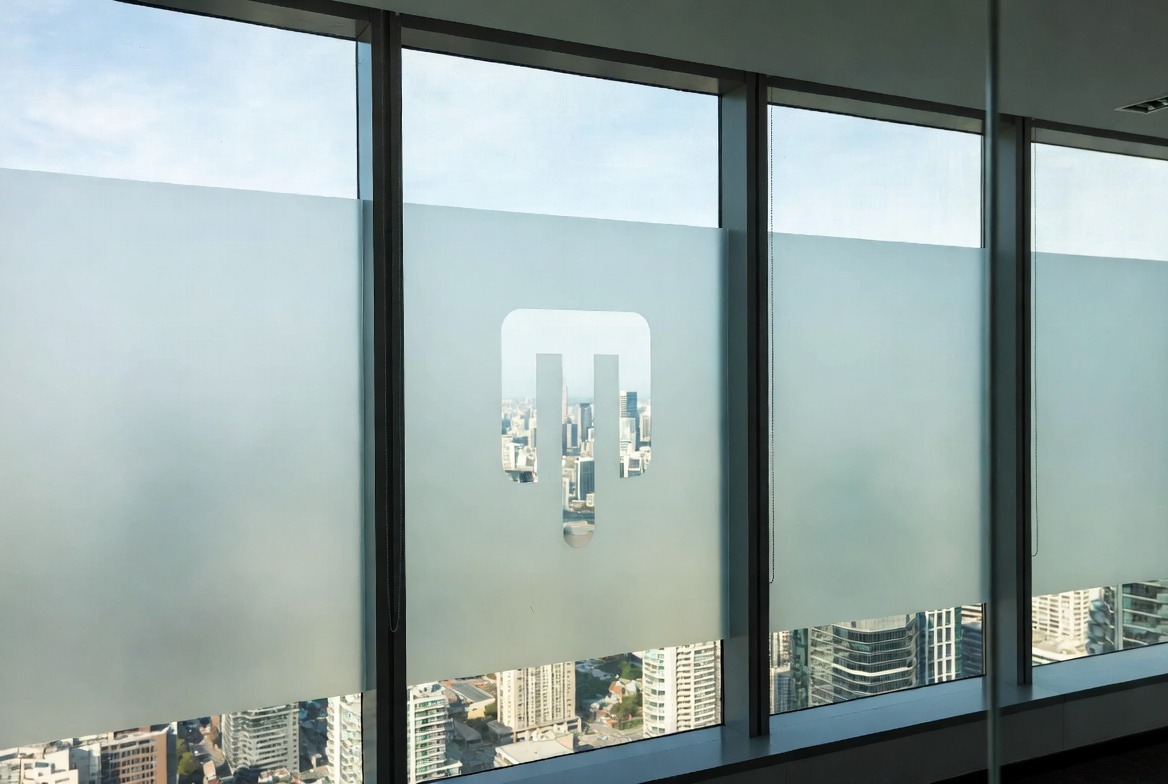
Window films help Toronto and GTA businesses do more with the glass they already have. They can add privacy, soften harsh light, support branding, and make storefronts, offices, and clinics look cleaner from the street. When window films are paired with vinyl graphics, the glass stops being just a window. It starts doing a job. It can guide people, share your logo, show your hours, and make the space feel more put together.
If you run a shop, clinic, office, salon, restaurant, or condo amenity space, this matters more than most people think. A plain pane of glass can feel cold, empty, and a bit awkward. People can see too much. Your front door may not say enough. Your boardroom may feel too exposed. That is why many local businesses pair window films with vinyl lettering, logos, and door graphics. The film changes how the glass works. The graphics change what the glass says.
This approach is common across Toronto and the GTA because local spaces vary so much. A Queen Street West storefront has diffirent needs from a North York clinic. A Markham office park feels diffirent from a Danforth café or a condo lobby near the waterfront. Some spaces need privacy first. Some need stronger branding. Some need both at the same time. That is where decorative window film and vinyl graphics work well together.
A good window tinting service plans the whole glass layout, not just one small part. That means looking at sightlines, handles, frames, room use, and how people walk up to the glass. If the plan is right, the result looks simple and clean. If the plan is rushed, the logo sits in the wrong place, the privacy band looks off, and the whole setup feels patched together. Thats the main difference.
What combining window films and vinyl graphics really means
The plain answer is simple. Window films change the surface of the glass. Vinyl graphics add names, logos, lettering, shapes, icons, or messages. Put together, they help the glass do two jobs at once. One job is function. The other job is communication.
The film side can include frosted film, dusted film, patterned film, privacy film, or light decorative finishes. These window films can block direct views, soften a room, reduce some glare, or break up large areas of plain clear glass. The graphic side can include a business logo, store hours, suite numbers, service lists, arrows, safety markers, or event promos. Some jobs use very little text. Some use alot. It depends on the space and what the glass needs to do.
Think of it like this:
- Window films change how the glass feels and functions
- Vinyl graphics change how the glass speaks to people
- Both together can make the space easier to use and easier to trust
This is why the combo works so well in offices, clinics, wellness spaces, and retail units. A meeting room may need privacy at eye level but still need the company name or room name on the glass. A front entry may need the logo, business hours, and maybe a soft privacy band near the bottom. A treatment room may need frosted film so patients feel more at ease, but the outer glass may still need clean wayfinding text. Same material family, but diffirent purpose on each pane.
People often think the job is only about style. It is not. The best window films projects solve real daily problems. They cut down visual clutter. They make it easier for customers to find the right door. They stop a room from feeling too exposed. They also help a business look more established, even if the actual upgrade is pretty simple.
That is why layout matters so much. The height of the film band matters. The size of the logo matters. The gap around the handle matters. If those things are off by even a bit, the pane can feel unbalanced. On glass, small mistakes show up fast. A good plan makes the whole surface feel calm. A bad plan makes the glass feel busy.
Why Toronto and GTA businesses keep using window films on commercial glass
Toronto businesses use window films because local glass gets alot of use and alot of attention. On a busy retail strip, people look at your glass before they look at anything else. In a clinic, people notice right away if the room feels too open. In an office, clear partitions can look modern for about five minutes, then staff start wishing the boardroom had more privacy. These are normal problems, not rare ones.
That is also why this works so well across many GTA areas. In Yorkville, businesses often want glass that feels polished and branded but not loud. In Scarborough plazas, front glass often needs stronger door info and easy-to-read logos. In Vaughan and Richmond Hill office spaces, teams usually want privacy film on meeting rooms and cleaner branding at reception. In older Toronto neighbourhoods like Leslieville or parts of the Danforth, storefront glass can be a little quirky, so spacing and measurement matter even more.
Seasonal changes matter too. Toronto summers bring strong sun on some exposures, and winter evenings make bright indoor spaces feel very visible from outside. Those shifts can make clear glass feel harsher than people expected. That is one reason commercial spaces keep turning to window films instead of leaving the glass bare. The federal climate pages for Toronto Pearson show the kind of seasonal conditions that affect comfort and visibility on glass in this area. You can see that on the Environment and Climate Change Canada site.
There is also a local business angle here. Toronto has many busy shopping streets, BIAs, office corridors, and mixed-use areas. That means glass is doing more than one job in a typical week. It has to look good from outside, feel comfortable inside, and help people know where they are going. The City of Toronto keeps public local data and area resources that show how broad and active the city’s commercial landscape is, which is one reason so many businesses use their glass as part of the customer experiance. You can explore that on the City of Toronto website.
Example 1: Queen West boutique. A small clothing shop had large clear windows, but the front looked kindof empty from the sidewalk. The owner did not want to block the product display, but she did want the store name to read better and the change room area to feel less exposed. A smart fix used a low privacy band on selected panes, clear space above for merchandise visibility, and clean vinyl lettering on the entry door. The result was not flashy. It just made the space make more sense.
Example 2: North York medical office. A clinic near a busy intersection had clear room partitions and a front desk area that felt too open. Staff wanted patients to feel more private right away. The fix used frosted window films across the centre of the room glass, plus small room labels and a simple logo near reception. That change helped with comfort and made the front area feel more settled. No wall rebuild, no big reno, just smarter glass use.
How to plan window films and vinyl graphics so the glass does not look messy
This part gets skipped too often. People pick a film, send over a logo, and hope it all works out on install day. That is where projects go sideways. Good window films work starts with planning the glass as a full surface, not as a random place to stick a few items.
A better plan usually starts with four questions:
- What does this pane need to do?
- Who looks at it first, inside or outside?
- What parts of the glass must stay open for light or views?
- Where are the handles, frames, locks, and sightlines?
Once you know that, the layout gets easier. The entry door may need the business name, hours, and suite info. The boardroom may need privacy at seated eye level. The side panel may only need a simple marker so people do not walk into the glass. The reception panel may need a logo, but not alot of extra text. Every pane has a job. If you give every pane the same treatment, the result often feels clunky.
One easy way to plan it is by zones:
- Brand zone: logo, business name, simple visual identity
- Privacy zone: frosted or decorative window films where people need screening
- Info zone: hours, suite number, arrows, room names, service labels
- Open zone: clear space for daylight, views, and less visual weight
That zone method works well in Toronto because spaces are rarely identical. A Liberty Village office may want a clean banded look with light branding. A Mississauga spa may want softer decorative coverage and elegant text. A Brampton storefront may need more obvious door lettering because foot traffic moves fast and people are deciding in seconds. The layout should match the actual use, not just a sample photo someone found online.
Material choice matters too. Frosted window films often work well for clinics, offices, and boardrooms. Patterned films can add a bit more style in salons, design studios, or condo amenities. Printed vinyl graphics can carry logos or event promos, while cut vinyl lettering works for doors and hours. None of these are hard to understand, but they do need to be matched well. A soft film with very heavy graphics can feel awkward. A strong logo with too much frosting around it can feel boxed in.
Then there is the install order. Usually the base film goes down first, then the graphics get placed on top or in the planned open area, depending on the design. If the installer is not thinking about sequence, spacing, and visibility from both sides of the glass, the final result can feel off. Thats why a real window tinting service should measure the glass, review the hardware, and mock up the layout before the job starts.
What to ask a window tinting service before you start
If you are paying for window films and graphics on the same glass, ask direct questions. Good shops do not mind that. In fact, the better the questions, the better the project usually goes.
Here are a few that help:
- Do you install both the film and the graphics, or is one part outsourced?
- Can you show a layout based on our actual panes?
- How will the design sit around door handles and metal frames?
- Which window films finish fits our goal best: frosted, decorative, privacy, or tinted?
- How should staff clean the glass after install?
The cleaning question matters more than people think. Fresh window films need time to settle. Busy doors get touched all day. In winter, slush and salt get dragged in. In restaurants and cafés, staff wipe glass fast because they have no time. If someone uses rough pads or starts scraping at a corner, the finish can wear out faster than it should. Soft cloths and mild cleaner are usually the safer move.
It also helps when the installer asks you good questions back. A decent window tinting service should ask what problem you want to solve first. Is it privacy? Branding? Both? Do you want the glass to feel warmer, cleaner, or easier to read from ten feet away? Do you need the room names changed later? Do customers approach from the left, the right, or straight on from the sidewalk? Those questions are not fussy. They are what keep the job from looking half-finished.
For Toronto and GTA businesses, this kind of project usually pays off because the glass already exists. You are not rebuilding the front. You are making better use of it. Good window films paired with simple vinyl graphics can make a space feel more private, more organized, and more like a real brand. That is useful for storefronts, offices, clinics, salons, restaurants, and shared commercial spaces all over the city.
If your glass feels too empty, too exposed, or just not very helpful, start there. A smart mix of window films and vinyl graphics can change how people read the whole space before anyone even says hello. That sounds small, but for local business glass, it matters alot.
Leave a Reply