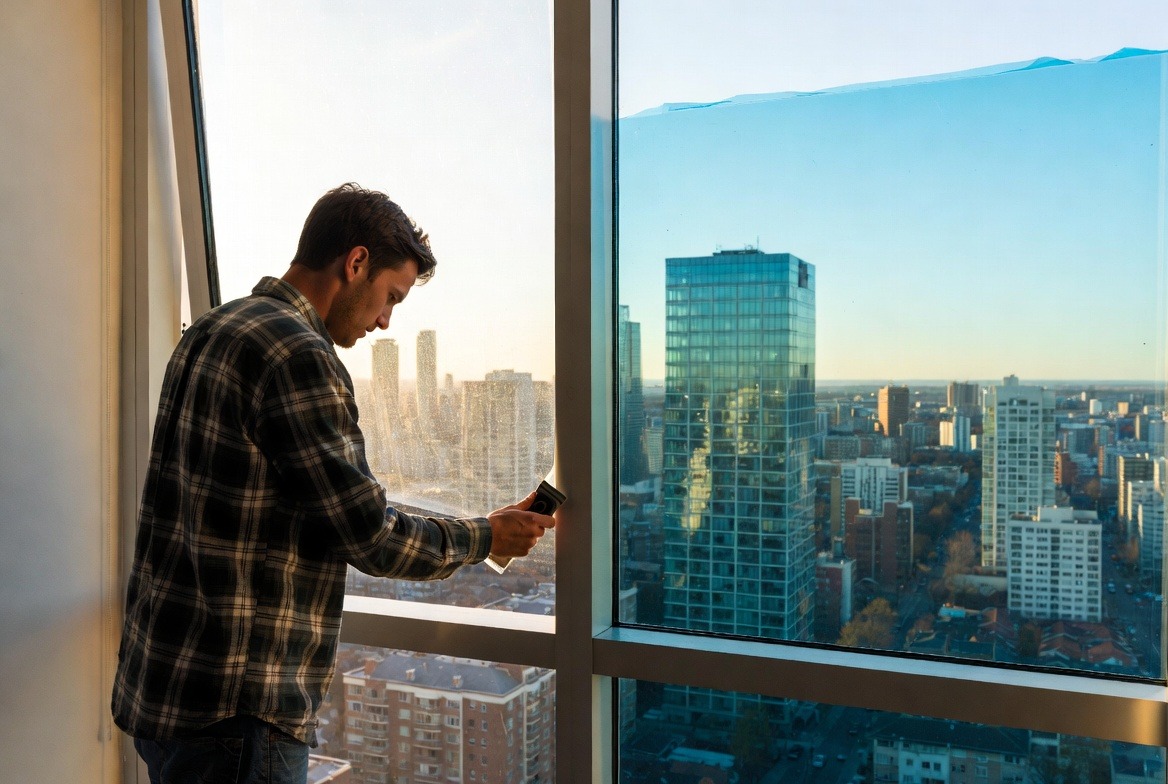
Window films can change a room fast. They add privacy, improve glass design, soften harsh sight lines, and help homes and businesses in Toronto and the GTA look more polished. But old window films can do the oppsite. They can bubble, peel, fade, trap dirt, and make a clean space look worn out.
If you are searching for decorative window film in Toronto, this is one of the main things to watch for: old film often gives clear warning signs before it fully fails. You may see a curled corner on an office door, a cloudy patch on a bathroom window, or a faded stripe across a boardroom wall. If you want more background on window film lifespan and peeling, that topic connects closely to what this article covers.
In places like North York, Etobicoke, Downtown Toronto, Mississauga, Vaughan, Markham, Richmond Hill, and Brampton, glass gets used hard. Condo lobbies get wiped all day. Office partitions get fingerprints every hour. Clinic doors open and close nonstop. Winter salt, slush, and dry indoor heat do not help. Summer sun is rough too. After a few years, older decorative window films start showing wear in ways that are easy to miss at first, but very hard to ignore later.
At Tintly Window Films, this comes up alot in salons, clinics, offices, storefronts, condo amenity rooms, and homes with front door glass or bathroom windows. A room may still have nice floors, good lighting, and fresh paint. But once the film starts failing, the whole place can feel dated. If you are planning a refresh, browsing decorative window film ideas early can help you spot what style fits the room now, not what worked years ago.
Quick list: 7 signs your old window films need replacing
- Bubbles keep coming back
- Edges peel or curl up
- The film looks faded, yellow, or cloudy
- Privacy is weaker than before
- The pattern or logo feels old
- Heat and glare complaints come back
- The glass never looks fully clean
Why decorative window films wear out faster in Toronto and the GTA
Toronto weather is rough on materials. In January, people drag in wet boots, salt, and slush. In summer, west-facing glass can sit in strong sun for hours. In spring, condo cleaning teams and office staff wipe glass again and again because smudges show up fast. In busy areas near Union Station, Liberty Village, Yonge and Eglinton, Square One, and Vaughan corporate parks, glass surfaces just get more daily use.
Older window films do not love that. Adhesives weaken. Edges lift. Moisture sneaks in. The surface starts catching dust. On decorative film, those small changes are easy to spot because the film is meant to look neat and even. When it does not, the room feels off.
The International Window Film Association explains that window films can help with privacy, glare control, and UV reduction. That means when old film stops giving those benefits, the failure shows up in both looks and function. It is not just about appearance. It affects how the room feels and how the space works day to day.
1. Bubbles keep coming back, even after cleaning
This is one of the most common signs. A tiny bubble on a newer install may settle out. Old decorative window films are diffrent. If bubbles keep coming back, grow bigger, or spread across the glass, the adhesive is often wearing out.
Bubbles make the panel look uneven. They also catch dirt around the edges. On frosted film, the finish starts looking blotchy. On patterned film, the design stops looking sharp. In offices, people notice this right away because meeting room glass is right at eye level. In homes, you see it on front door sidelights or bathroom panes where the light hits hard.
We saw this in a North York clinic where frosted film on two consultation room doors had started bubbling near the handles. Staff cleaned the glass every day, but the bubbles kept getting worse. The doors looked older than the rest of the clinic. Once the film was replaced, the whole hall looked cleaner and more private. Same glass. New feel.
2. The edges peel, lift, or curl
Peeling usually starts small. A top corner lifts. A side edge starts curling. Then dust gets under it. Then the line gets darker and messier. A few weeks later, the film looks loose and tired.
This happens alot on high-touch glass. Think office entry doors, restaurant dividers, front desk panels, and clinic room doors. People touch these areas all day. Add winter grit, repeated wiping, and dry heated air, and the edge starts failing faster.
Once the edge lifts, the film stops looking fitted. That is the problem. Decorative window films are supposed to look clean and intentional. A peeling edge makes the whole sheet look cheap. If you see more than one lifted edge, patching it rarely lasts for long.
3. The finish looks faded, yellow, or cloudy
Decorative window films should look even from top to bottom. Frosted films should stay crisp. White tones should stay bright. Clear cut patterns should still look sharp. When old film ages badly, the finish changes.
Some films go dull. Some turn cloudy. Some get yellow around the edges. Some panels just stop matching the panel beside them. This is common on west-facing glass in Etobicoke and condo amenity spaces in Mississauga where the sun hits for long stretches.
A faded finish hurts first impressions. A boardroom may have new chairs and a smart layout, but if the glass looks old, clients still notice the glass first. A retail shop near Queen Street may have great products and strong lighting, but cloudy decorative film on the front partition makes the space feel a bit tired. These details matter more than people think.
4. The room does not feel private anymore
A big reason people use decorative window films is privacy. They want light to pass through, but they do not want clear views through the glass. This matters in bathrooms, waiting rooms, offices, schools, gyms, salons, and treatment spaces.
As older film wears out, privacy can drop. Corners peel. Thin spots form. The surface gets patchy. A person standing at one angle can suddenly see more than they should. That makes the room feel exposed even if the film is still there.
This comes up a lot in mixed-use areas of the GTA where glass walls and interior partitions are common. A Richmond Hill clinic may need calm and privacy between rooms. A condo office in downtown Toronto may need partial screening without making the space dark. A salon in Vaughan may want clients to feel tucked away, not on display. Once old film loses its even finish, it stops doing that job well.
General UV and sunlight guidance from Health Canada is also a good reminder that bright sun affects more than comfort. It affects how people use a room and how materials in that room age over time.
5. The design, pattern, or logo feels out of date
Sometimes the film is still hanging on, but the design no longer fits the room. This is a real sign too. Decorative window films sit right at eye level. If the style feels old, the room feels old.
Maybe the business changed its logo. Maybe the office had a renovation but the old stripe pattern stayed. Maybe the frosted bands looked modern ten years ago but now feel heavy and busy. Homes can run into this too. A bathroom remodel may leave older glass film looking out of place. A basement office may need a cleaner look after a full update.
One small case in Vaughan makes this easy to see. A design studio had thick frosted bands across a meeting room wall. The team reworked the office, changed furniture, and updated branding, but the old film stayed. The room felt cluttered even though it was neat. They switched to a softer gradient film with a cleaner layout. Staff said the room felt bigger the same week. Nothing else changed.
6. Heat and glare complaints are coming back
Decorative window films are often chosen for privacy and design first, but comfort still matters. When older window films wear down, a room can start feeling harsher again. Screens get more glare. Sunlight feels sharper in the afternoon. Furniture near the window may start fading faster.
This happens a lot in west-facing offices in Etobicoke, lake-facing condos downtown, and storefronts in Markham or Brampton with large front windows. Even if the decorative film was not meant to do the full job of a solar film, worn film can still make the room feel less comfortable over time.
If staff keep moving chairs away from the glass, closing blinds more often, or mentioning glare during meetings, the film may no longer be helping the way it once did.
7. The glass never looks fully clean anymore
This is one of the clearest signs that replacement is near. You wipe the glass and it still looks bad. You clean it again, but the panel still looks smudged or dirty. Then you realise the problem is not the cleaner. The problem is the old film.
Once decorative window films begin to break down, they trap grime in scratches, under lifted edges, and around damaged spots. Bathroom windows with steam, front doors with fingerprints, and office partitions near recpetion desks are common trouble spots. The film holds the dirt in a way fresh film does not.
At that point, more scrubbing rarely helps. It often makes the film look worse. A new install can do more in one day than months of trying to clean around the damage.
What to do before replacing old window films
Start with a simple check in daylight. Look at the corners, the side edges, and the middle of each panel. Step close. Then step back. Try to spot bubbles, cloudy patches, weak privacy areas, trapped dirt, or design elements that no longer fit the room.
Next, think about what the space needs now. More privacy? Cleaner branding? A brighter feel? Less visual clutter? Better comfort? Decorative window films work best when the design matches the room and the way the room is used. A lot of older film stays up just because it is still attached, not because it still works well.
It also helps to replace the film before a tenant move-in, office refresh, store update, or home listing. Old window films can quietly drag down the feel of the whole space. Fresh film can make the glass feel finished again, and that changes how visitors read the room.
Final thoughts
If your old decorative window films are bubbling, peeling, fading, losing privacy, bringing back glare, or making the glass look dirty all the time, it is probably time for replacement. In Toronto and the GTA, daily use, sharp weather shifts, and constant cleaning make these problems show up sooner than many people expect.
New window films can improve privacy, sharpen design, clean up the look of a room, and help the space feel current again. For businesses, that can change how clients see the space. For homes, it can make daily rooms feel calmer and more put together. It is a simple update, but the visual payoff is real.
Quick View FAQs
1. How do I know if old decorative window films need replacing?
Look for bubbling, peeling, fading, trapped dirt, or weaker privacy. If the glass still looks poor after cleaning, the film is likely worn out.
2. Can old decorative window films be repaired?
Small issues can sometimes be checked by a pro, but older film usually needs full replacement. Repairs often fail again when the adhesive is already weak.
3. Why do window films wear out faster in Toronto and the GTA?
Winter salt, slush, dry indoor heat, strong summer sun, and heavy daily cleaning all add wear. High-touch glass doors and partitions age faster too.
4. Will new window films improve privacy right away?
Yes, new decorative window films can improve privacy fast when old film has become patchy or thin. The finish also looks cleaner and more even.
5. Is replacing film cheaper than replacing the glass?
In many cases, yes. Replacing the film is often a faster and less costly way to refresh the look and function of the glass.
Leave a Reply